PDM/PLM MANAGEMENT SOLUTIONS FOR MANUFACTURERS
WHAT ARE PDM AND PLM?
PDM helps companies manage engineering data such as CAD models, drawings, attributes, revisions, and release status.
PLM covers a broader scope by connecting data, people, and processes throughout the entire product lifecycle—from requirements and design to manufacturing and service.
Depending on business size and process complexity, companies can start with basic CAD data management and gradually expand toward an enterprise-wide PLM platform.
CHOOSE THE RIGHT SOLUTION
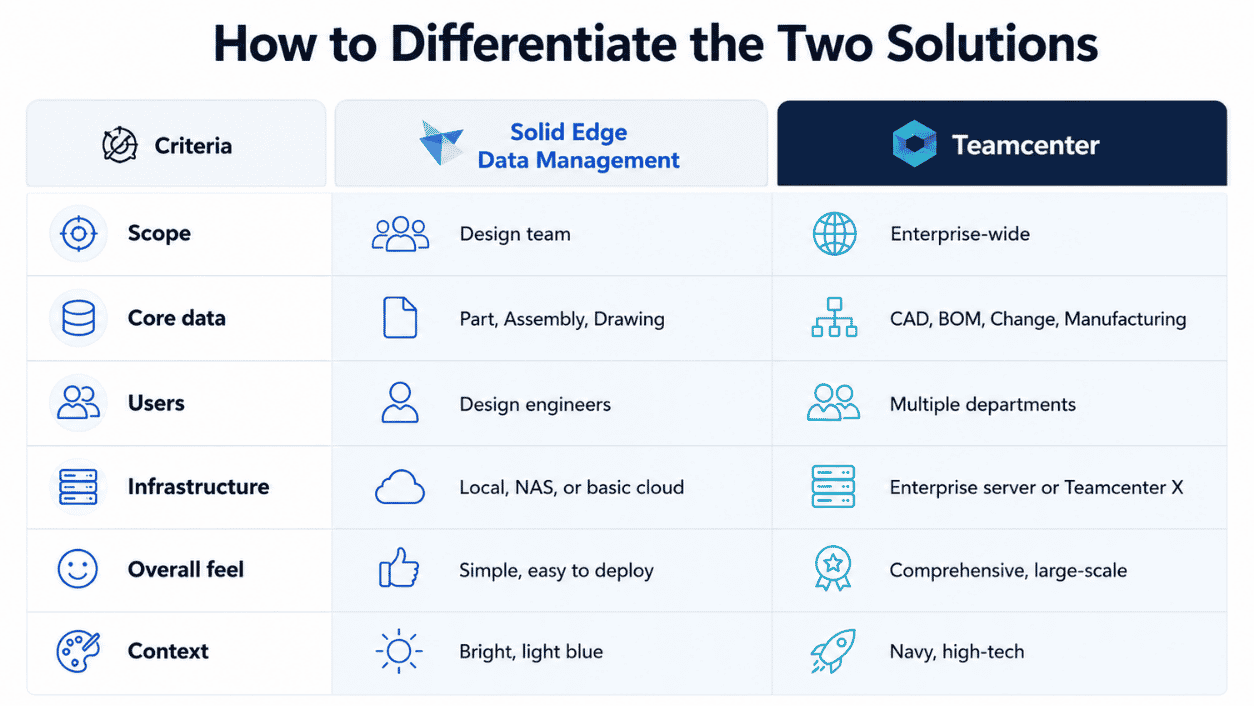
Solid Edge Data Management
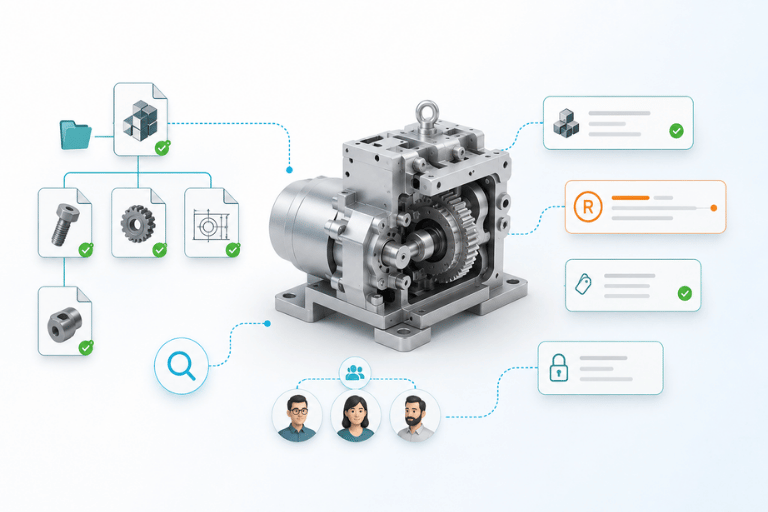
A CAD data management solution for Solid Edge users, supporting storage, search, revision control, metadata management, and release status management for parts, assemblies, and drawings.
Siemens Teamcenter
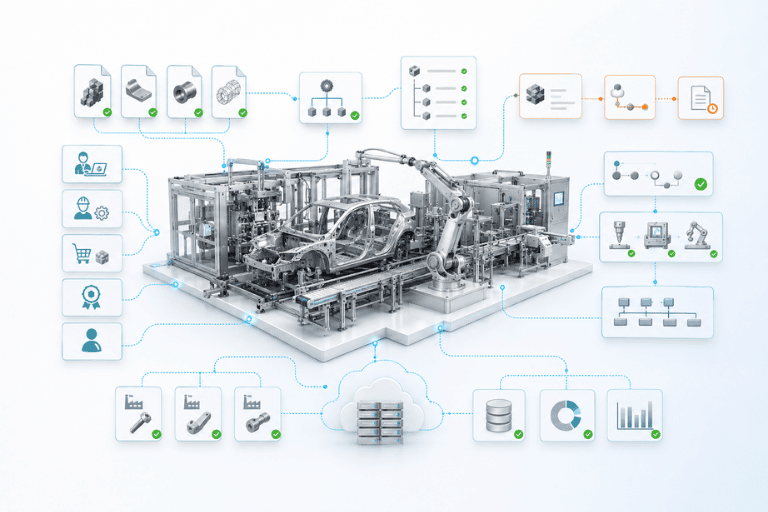
An enterprise PDM/PLM platform designed for companies that need centralized management of product data, BOMs, engineering changes, workflows, and collaboration across multiple departments.
BENEFITS OF PDM/PLM SOLUTIONS
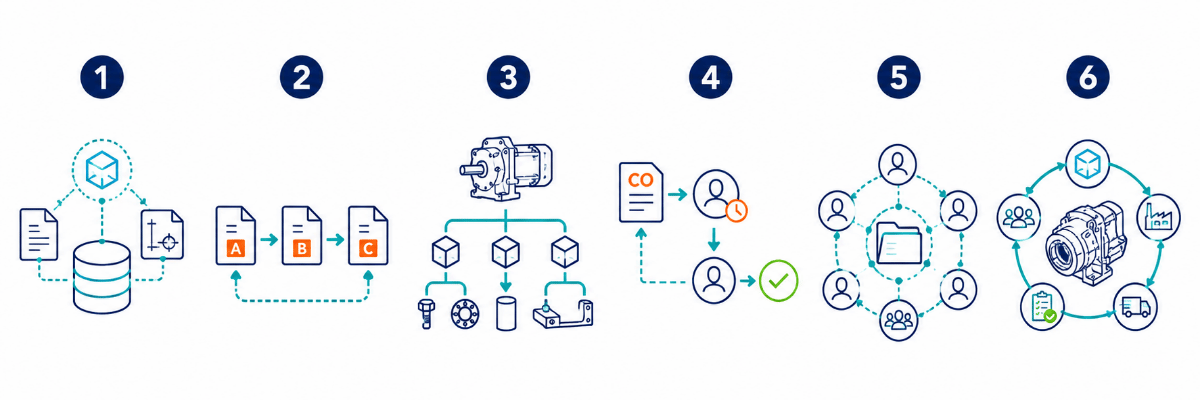
1. Centralized Data Management
Store CAD models, drawings, documents, and product information in a unified system, making data easier to search, access, and manage.
2. Version and Revision Control
Track modification history, identify the latest approved revision, and reduce the risk of using outdated data in design or manufacturing.
3. Accurate BOM Management
Control product structures, components, and BOM revisions while keeping engineering, manufacturing, and purchasing teams aligned.
4. Engineering Change Control
Manage engineering change requests, impact assessments, approvals, and implementation through a structured and traceable process.
5. Improved Collaboration
Connect design, manufacturing, quality, purchasing, and management teams around a single source of product data.
6. Build a Foundation for Digital Transformation
Standardize data and processes to create a scalable foundation from CAD file management to PDM, PLM, and Digital Thread initiatives.
IMPLEMENTATION PROCESS
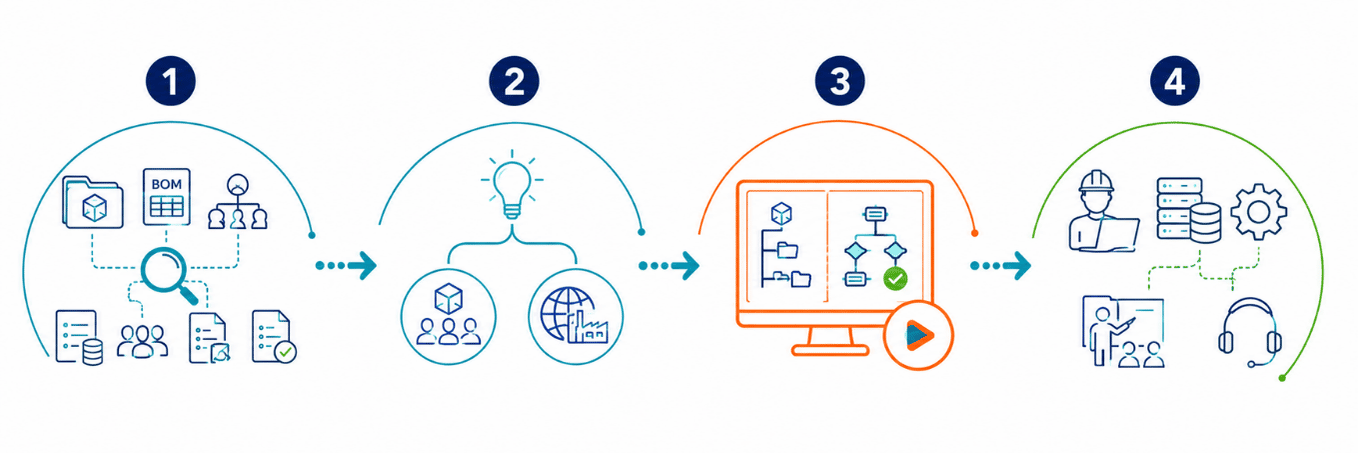
Step 1 – Current-State Assessment
Evaluate how files, revisions, BOMs, and collaboration processes are currently managed.
Step 2 – Solution Recommendation
Select Solid Edge Data Management or Teamcenter based on business size, process complexity, and implementation objectives.
Step 3 – Real-World Demo
Demonstrate search, modification, approval, and data release workflows using the company’s actual business scenarios.
Step 4 – Implementation & Training
Configure the system, establish the required processes, train users, and provide post-implementation support after go-live.
Current-State Assessment → Solution Recommendation → Real-World Demo → Implementation & Training
NOT SURE WHETHER YOUR COMPANY NEEDS PDM OR PLM?
Top Solutions evaluates your number of users, CAD data environment, BOM management requirements, and engineering change processes to recommend the most suitable solution.
FREQUENTLY ASKED QUESTIONS (FAQ)
What is the difference between PDM and PLM?
PDM primarily focuses on managing engineering data such as CAD files, drawings, metadata, and revisions.
PLM has a broader scope and can include BOM management, engineering change management, workflows, manufacturing processes, collaboration, and product lifecycle information across the organization.
Should my company choose Solid Edge Data Management or Teamcenter?
Solid Edge Data Management is suitable for design teams that primarily need to manage Solid Edge data, file access, and basic revision control.
Teamcenter is better suited to organizations that require centralized management of multiple data types, BOMs, workflows, engineering changes, and cross-functional collaboration across departments.
Do small businesses need PDM?
Yes.
As the number of CAD files, projects, and users increases, PDM can help reduce lost data, incorrect revision usage, and duplicate design work.
Companies can begin with a limited implementation scope and expand the system as their data management requirements grow.
Does Top Solutions support migration of existing data?
Yes.
Top Solutions can assess existing data structures, naming conventions, metadata, and current processes to develop an appropriate data standardization and migration approach based on the scope of the implementation project.